


.svg)
.svg)
.svg)

Medical Billing


Introduction
Benefits of the course
 Take one course - Receive a certification
 Save money and time!
 Precise learning goals
 All instructions are recorded
 Over 1 million students worldwide
 100% remote learning

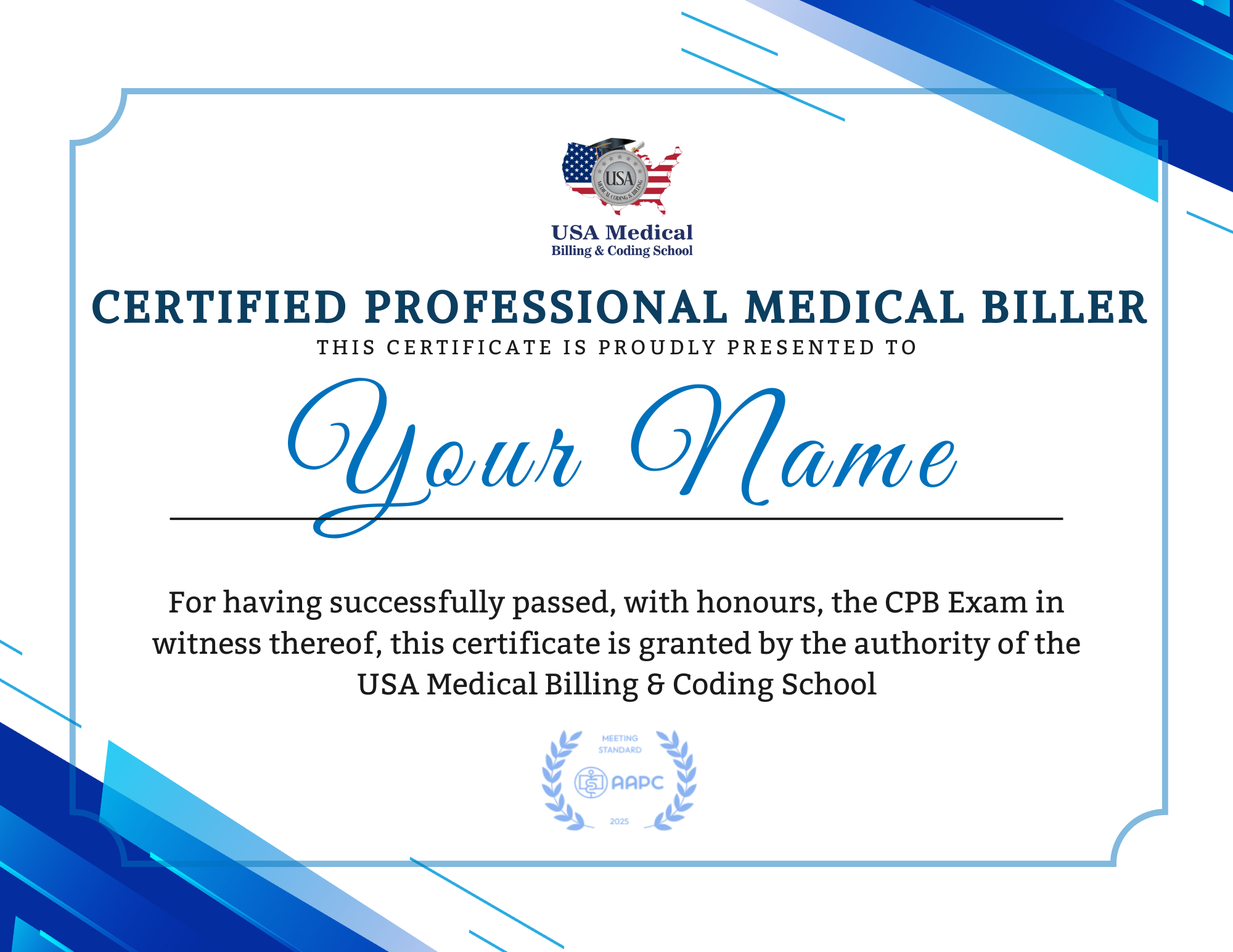
Certified Professional Biller

Commitment


Course outline



-
Lecture: Overview of the U.S. healthcare system, medical terminology, compliance, ethics, and healthcare research resources.
-
Practical: Exercises on navigating healthcare references, coding resources, and compliance documentation.
-
Lecture: HMOs, PPOs, EPOs, Medicare, Medicaid, commercial insurance plans, and reimbursement structures.
-
Practical: Compare insurance plan types and analyze how payer differences affect billing processes.
-
Lecture: Patient demographics, eligibility verification, HIPAA compliance, and registration accuracy.
-
Practical: Simulated patient registration and insurance verification case exercises.
-
Lecture: ICD-10-CM coding structure, conventions, guidelines, and diagnostic coding fundamentals.
-
Practical: Coding exercises using real-world diagnosis scenarios and documentation review.
-
Lecture: CPT coding fundamentals and accurate reporting of medical procedures and services.
-
Practical: Practice assigning CPT codes based on clinical procedure documentation.
-
Lecture: HCPCS Level II coding for supplies, equipment, outpatient services, and non-physician procedures.
-
Practical: HCPCS coding exercises involving medical supplies and outpatient billing cases.
-
Lecture: NCDs, LCDs, medical necessity policies, diagnosis-to-procedure linking, and payer requirements.
-
Practical: Case-based exercises on linking diagnosis codes to procedures for reimbursement.
-
Lecture: Professional and institutional claim forms, billing workflows, documentation sourcing, and common claim errors.
-
Practical: Complete CMS-1500 and UB-04 claim forms using sample patient cases.
-
Lecture: Denial management, payment posting, appeals, collections, and revenue cycle integrity.
-
Practical: Analyze denied claims and perform follow-up and appeals exercises.
-
Lecture: Medicare, Medicaid, Tricare requirements, reimbursement guidelines, and payer processes.
-
Practical: Billing exercises using government payer claim scenarios and compliance rules.
- Lecture: BCBS plan structures, authorization requirements, payer-specific billing steps, and state regulations.
- Practical: Practice claim submission and authorization workflows for BCBS cases.
- Lecture: Commercial insurance variations, COB rules, workers’ compensation billing, and reporting standards.
- Practical: Solve commercial payer and workers’ compensation billing case studies.

 120-hour hybrid program
 Access to AAPC-aligned curriculum
 Live instruction (synchronous)
 Independent study assignments (asynchronous)
 Hands-on coding labs
Case-based scenario training
Practice exam preparation
Hands-on coding labs
Case-based scenario training
Practice exam preparation
- Taught by AAPC certified instructors with industry experience
- Flexible learning: online from anywhere with instructor-guided and self-paced
- Interactive lessons and real-world examples
- Job readiness support after certification